
Inventory valuation
The valuation report answers one question: what was your stock worth at the end of a day? Any past day is exact, because the ledgers are append-only and the report replays them.
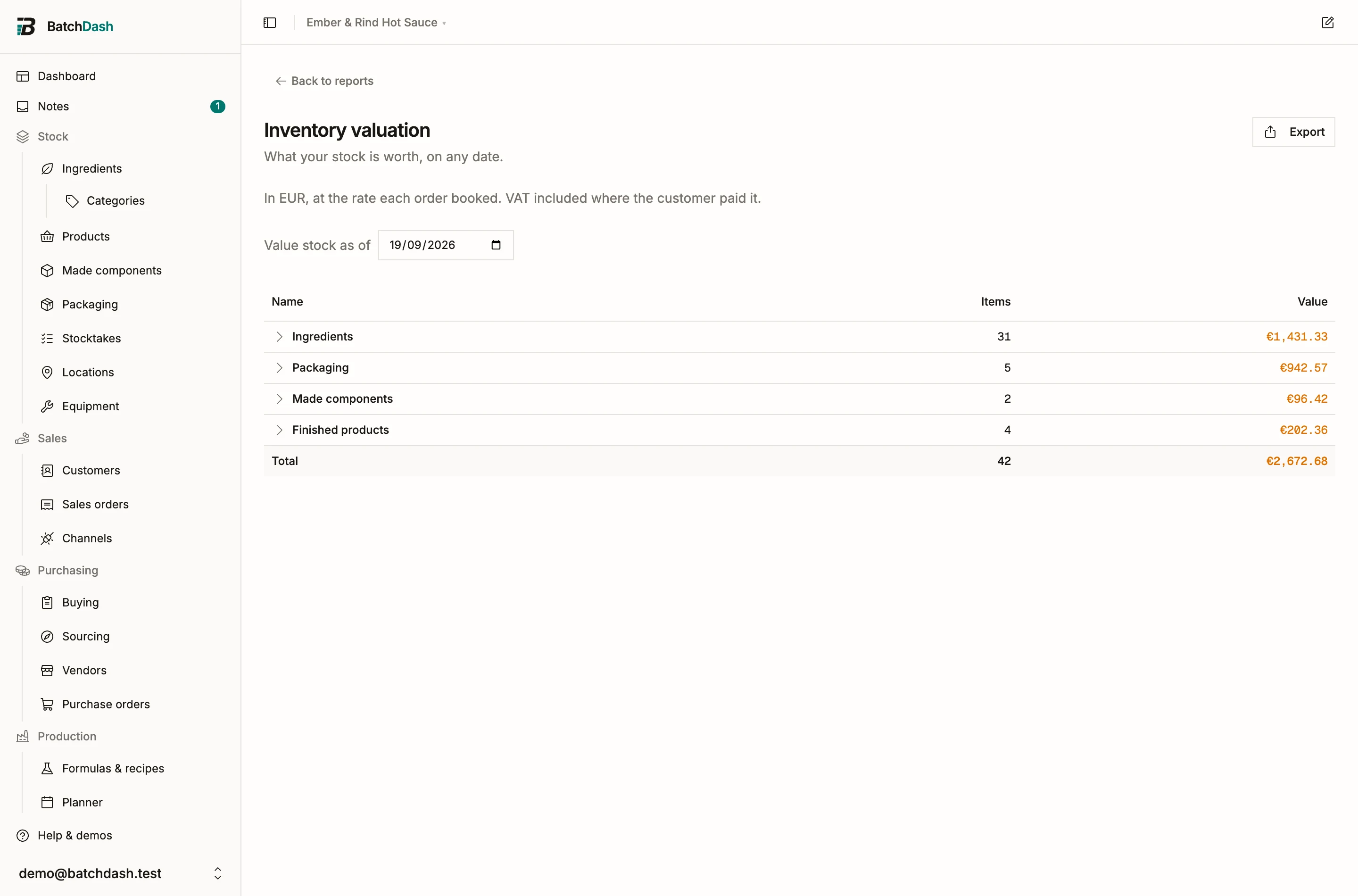
Ingredients and packaging are valued at weighted average cost: the same figure their own pages show. Made stock is valued at its booked batch value, the sealed cost of the batches that produced it under what your unit cost counts. Packaging you used on a product is part of that product’s cost, so it is never counted again in the bulk’s value.
What it leaves out, and says so
Section titled “What it leaves out, and says so”Stock with no costed delivery behind it is never guessed at. The report counts it as unvalued, keeps it out of the total, and tells you how many items it left there. Log a priced delivery and the next valuation picks it up. Free materials are worth zero on purpose, and archived items are out of the figures entirely.
The CSV carries one row per item, with quantity, unit value, the valuation basis, and an unvalued flag, so your spreadsheet can slice what the page rolls up.
Reading a past date
Section titled “Reading a past date”Pick a date and the report rebuilds the shelf as it stood that evening: every delivery, batch, sale and loss dated on or before it, in the order the ledger recorded them. Nothing is stored in advance, so there is no snapshot to drift from the truth. A backdated entry changes the past the moment you book it, which is the point of an append-only ledger and the reason a month-end figure can move after month end.