
Made components
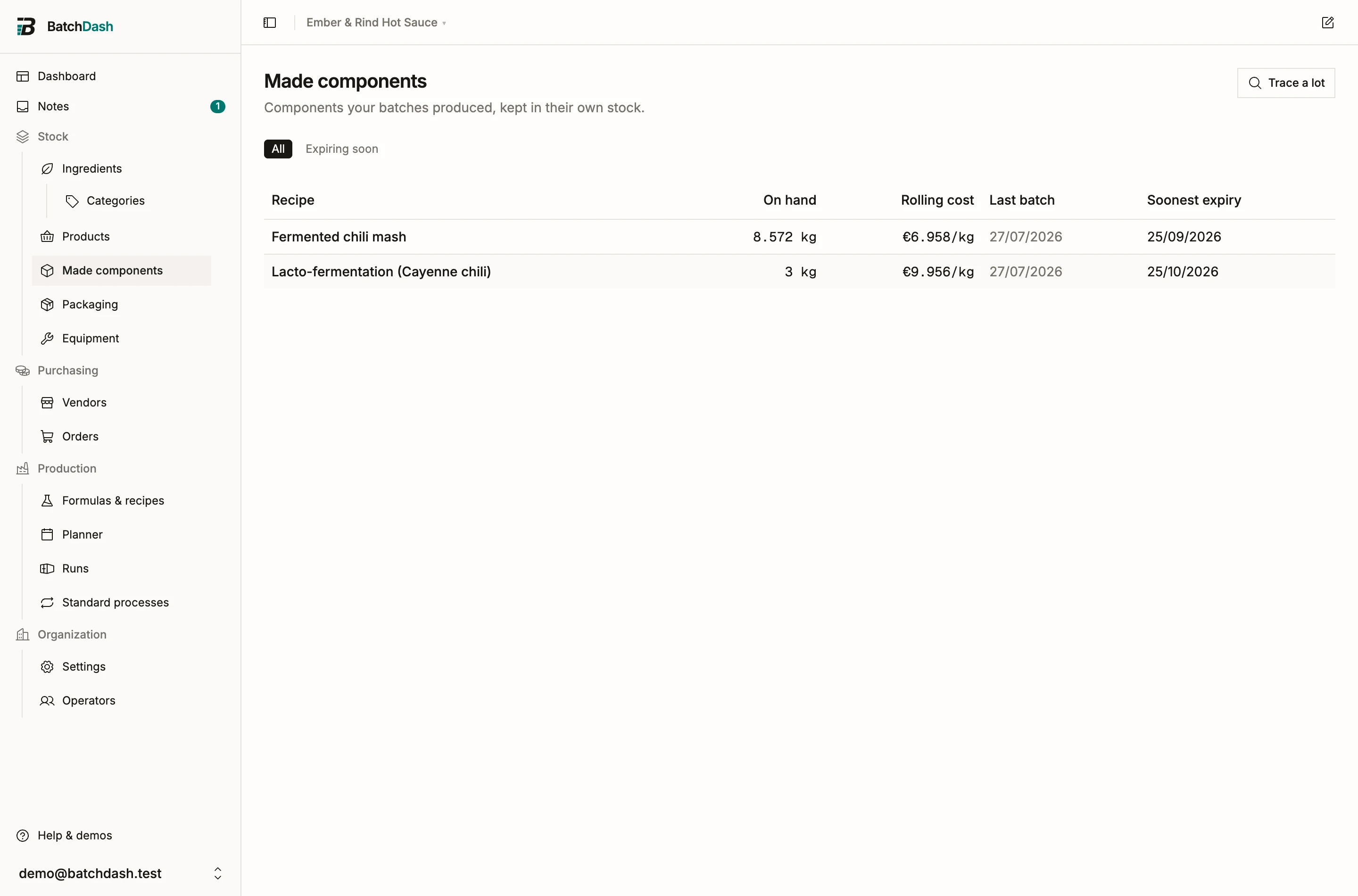
A made component is something you produce in order to use again: a fermented chili mash that goes into three different sauces, a base cream you scent per product. When a component run completes, the output lands in Made components: its own stock, next to your raw ingredients but kept separate from them. This module is part of the larger plans.
Booked at real batch cost
Section titled “Booked at real batch cost”Each completed batch books into component stock at that batch’s actual cost: the ingredients it consumed at their weighted average cost, plus what else the run counted. Across batches, the component carries a Rolling cost, the same averaging idea as an ingredient’s WAC. When a later batch draws the mash, it pays that average.
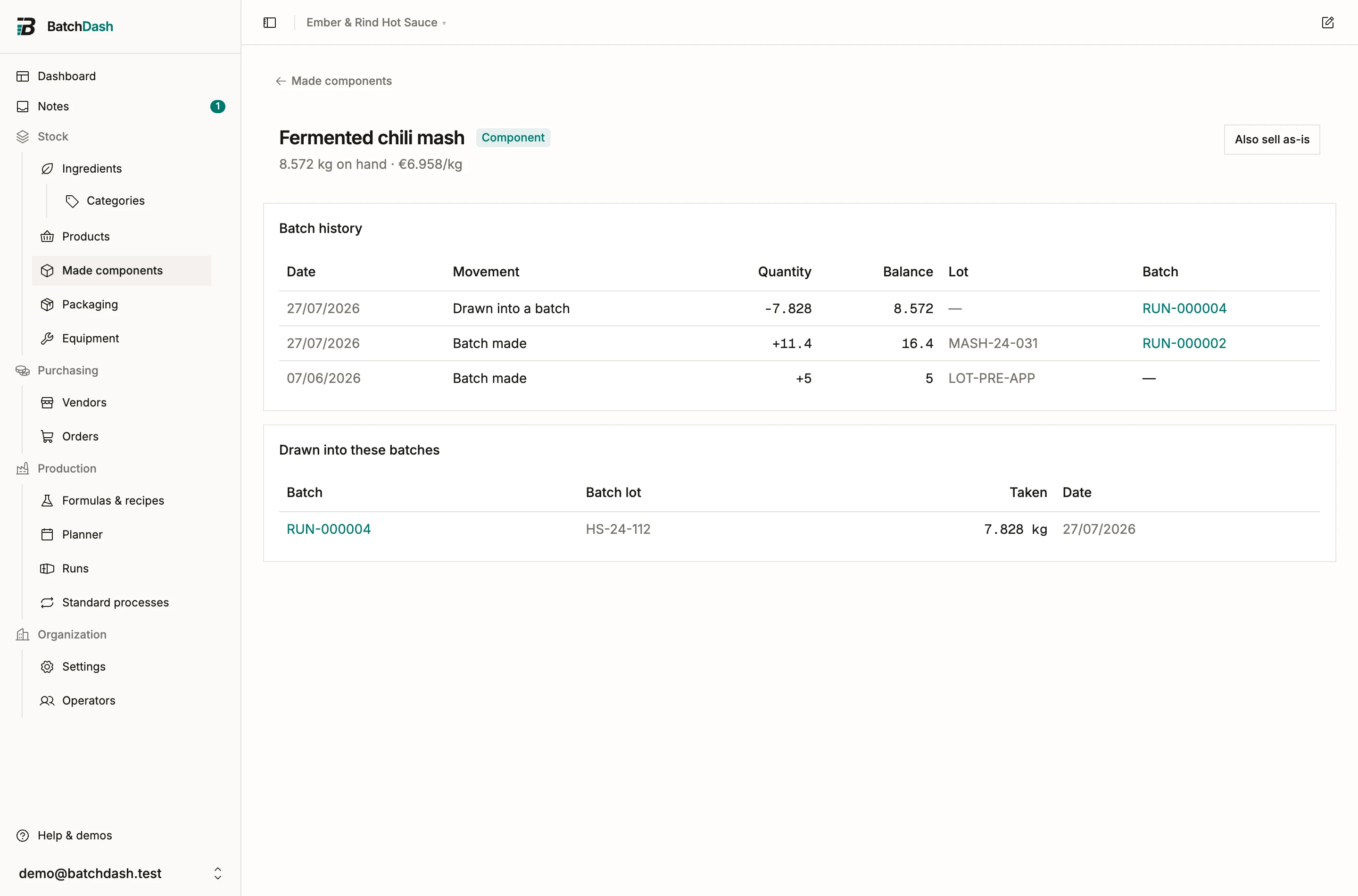
The component page keeps a Batch history ledger: every movement (Batch made, Drawn into a batch, Sold, Loss, Adjustment) with quantity, running balance, lot, and the batch behind it.
Correct on a row fixes its paperwork after the fact: the lot code, the expiry date, and the note. Each change writes a line under the row saying what it was, what it became, and who changed it. On a row a batch produced, the lot code and the expiry are locked, because the batch record owns them; the note stays editable everywhere. Quantity and cost are never editable, so an entry that moved stock is reverted and recorded again rather than typed over.
Drawing into later batches
Section titled “Drawing into later batches”When a recipe uses the component as a sub-formula, a run of that recipe offers to draw from stock instead of making a fresh sub-batch, in full or in part. See executing a run. The component page lists those draws under Drawn into these batches.
Opening balances
Section titled “Opening balances”Made 12 kg of mash before you started tracking it here? Use Set an opening balance… on the component’s process page: enter the quantity on hand and what one unit cost, plus an optional lot code and expiry. It joins the ledger as an opening entry and counts in the rolling cost. Components created from standard processes are where this comes up most.
Recording what leaves
Section titled “Recording what leaves”A component can leave stock by hand too: Record what leaves on its page covers a spoiled batch, an expired one you binned, a sample, or a count correction. A count correction states a Reason as well, preset to Correction. There is no “Sold” here; a component sells through its own product line (below). The dialog’s From batch field names the exact batch the units came from, and an item flagged Expired in the list stays flagged until the expired batch is used up or thrown away.
Selling a component as-is
Section titled “Selling a component as-is”Some components turn out to be products in their own right: customers want the mash itself. Also sell as-is turns the component into a sellable product line. It keeps the same recipe but gets its own stock, price, and margin, and the component page links to what it sold as.
Lot recall
Section titled “Lot recall”Trace a lot walks a lot forward. Enter a batch lot code and you see what that batch made and every batch that later drew the component. One caveat: draws come from pooled stock, so the trace lists every batch that drew the component; the exact lot cannot be proven. For a recall, treat it as your worst-case list to check.