
Packaging items
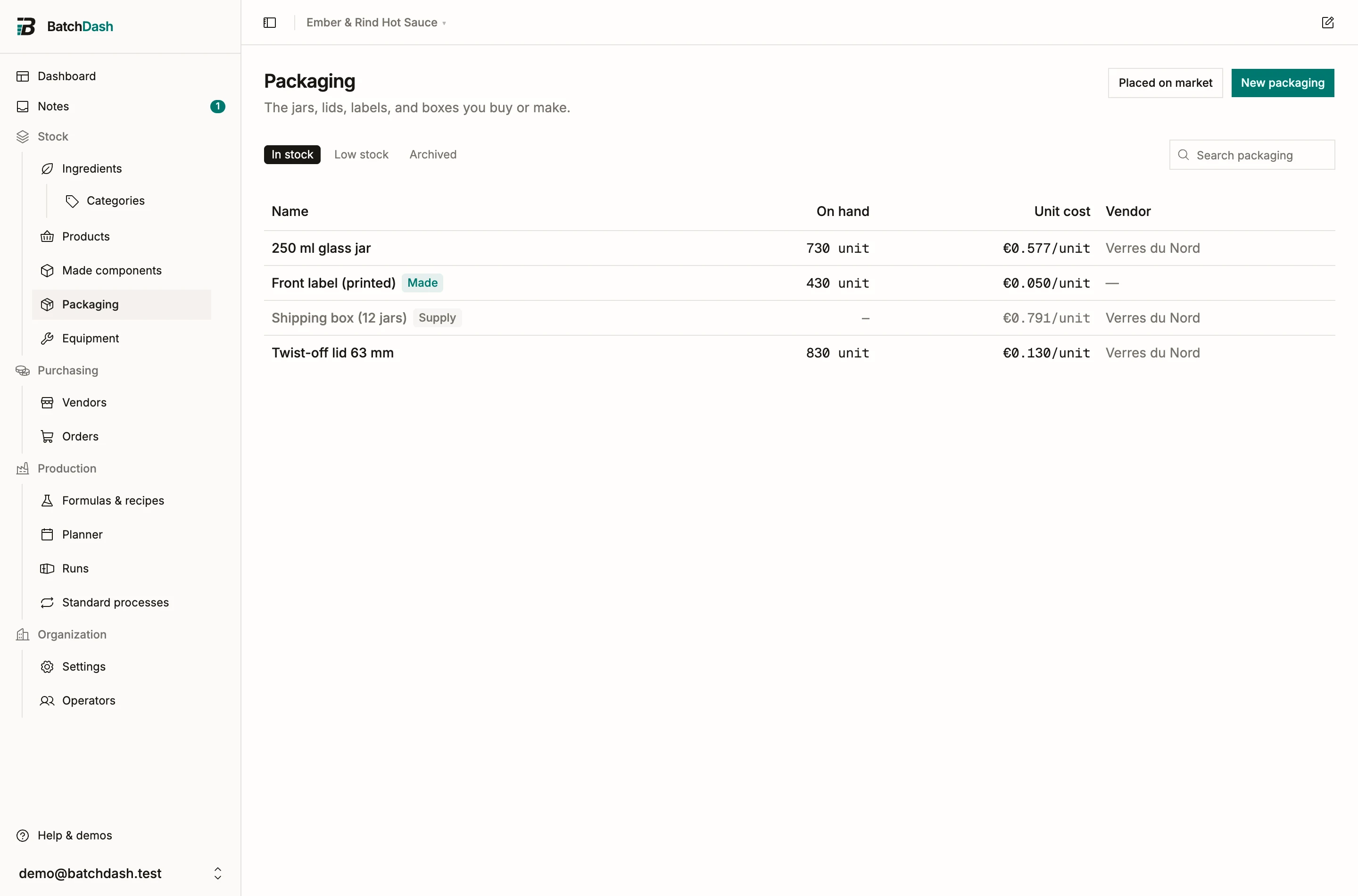
A 250 ml jar of hot sauce is more than sauce: jar, lid, label, maybe a tamper band. The Packaging page tracks those items like stock, with their own levels, costs, and history, so the packed cost of a product is real and shortages surface before bottling day.
Add an item
Section titled “Add an item”Click New packaging and set the Name, the Unit, the current Stock on hand, and a Reorder at threshold. The Stocking choice decides how the item behaves:
- Inventoried (bought): the normal case. Bought through orders, stocked, counted, costed.
- Made in-house: you produce it yourself. A printed label carries the cost of making it.
- Shipping supply: mailers, void fill, tape. The spend is recorded when you buy it, but it never enters stock or a unit cost.
Stock and history
Section titled “Stock and history”Each item keeps a ledger like an ingredient’s: deliveries in, losses out, a running balance under Stock history. Buy packaging through purchase orders (mark the line as packaging) and receiving books the delivery at what you actually paid, fees included.
For everything an order does not cover, click Record stock:
- Made a batch logs an in-house production, with a Cost per unit for what making one cost you (label stock, ink, card).
- Counted the shelf sets the balance to what a physical count actually found, with a Reason for why it moved (preset to Correction).
- Lost or broke some records breakage.
Below the Reorder at threshold an item is flagged Low, at zero Out. Filter the list by In stock, Low stock, or Archived.
Tick the box at the left of a row to select it, and the filter row becomes an action bar with Archive: several items leave the list at once, after a confirmation that names the count. The selection covers the page you are looking at.
How packaging enters product cost
Section titled “How packaging enters product cost”Through the packaging set of each sellable product format. A “250 ml jar” format might consume 1 jar, 1 lid, and 1 label per unit sold. When a production run books output in that format, the set’s items leave packaging stock and their unit costs land in the packed cost of the product. A shipping supply never does: it stays an expense, deliberately outside any per-unit cost.
If what you sell must also be declared by weight and material (glass, plastic, cardboard), fill the declaration fields on each item; Packaging declaration explains the yearly rollup.
This module is part of the larger plans.